
Operating it
A cloud is a thing somebody runs. This is that side.
The console has an administration side in three layers: metal, substrate, platform. Click a picture to enlarge.
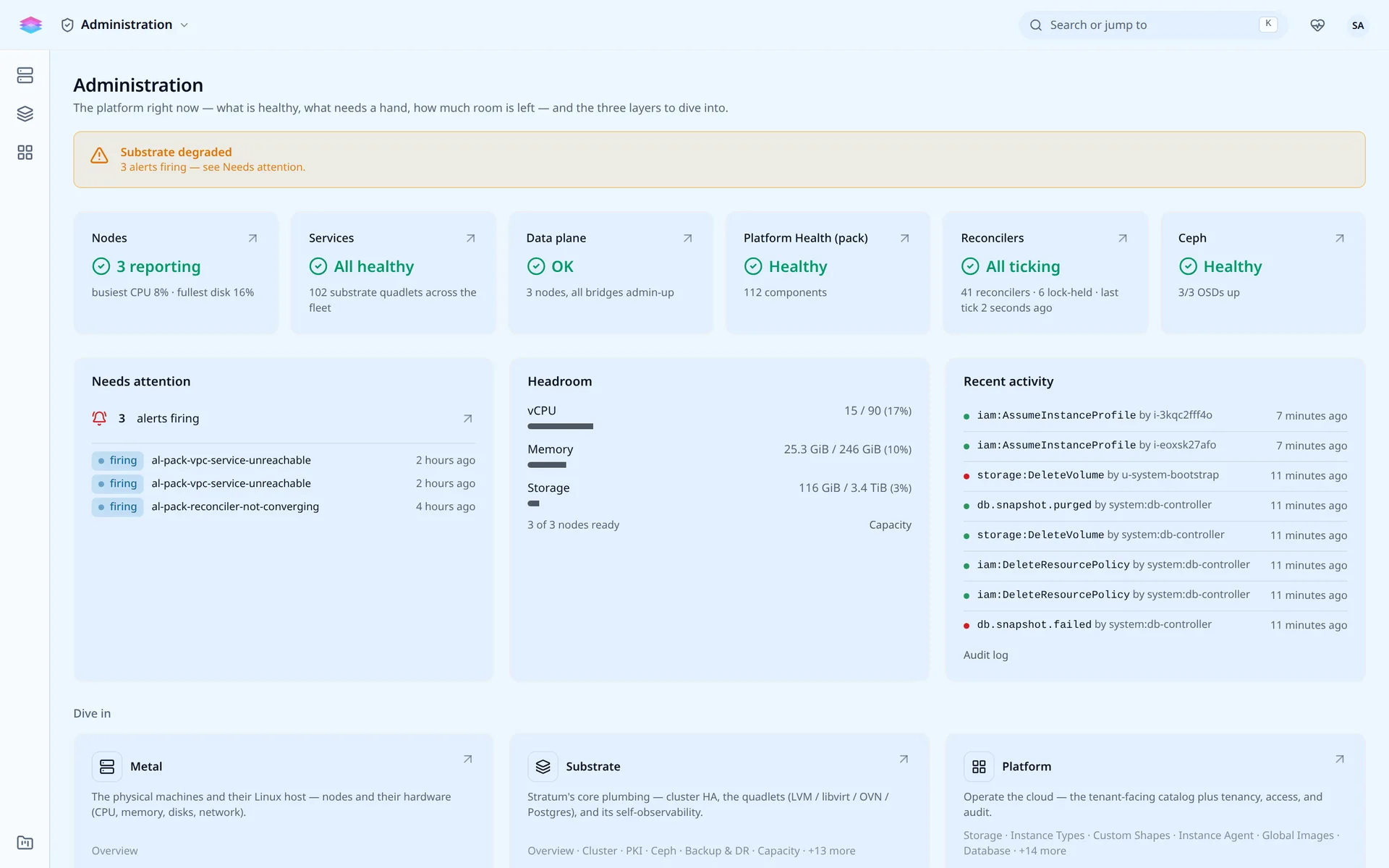
Metal
Nodes, disks, pools, the network fabric.
-
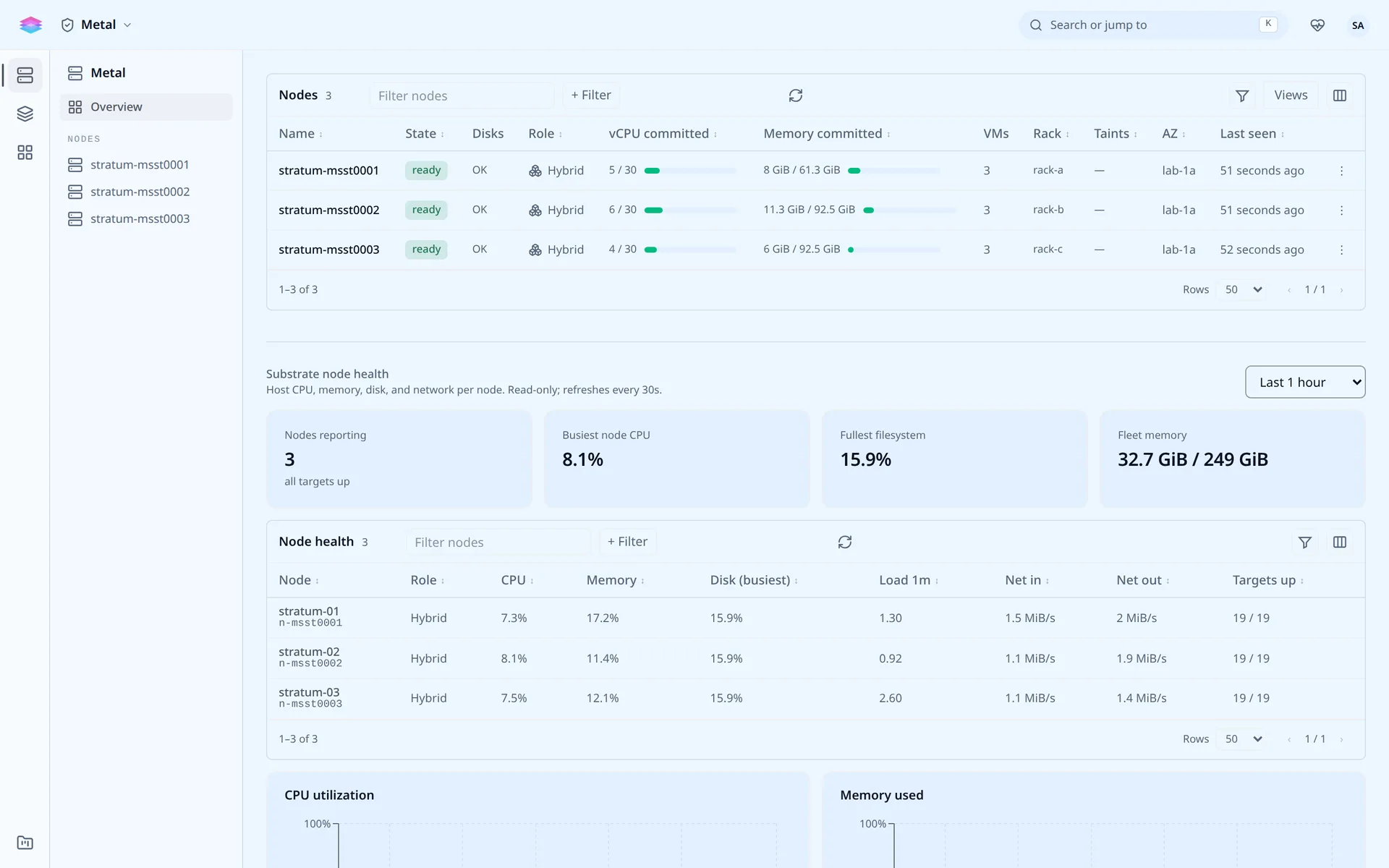
Nodes Every node with its role, readiness and load; drain and evacuate. -
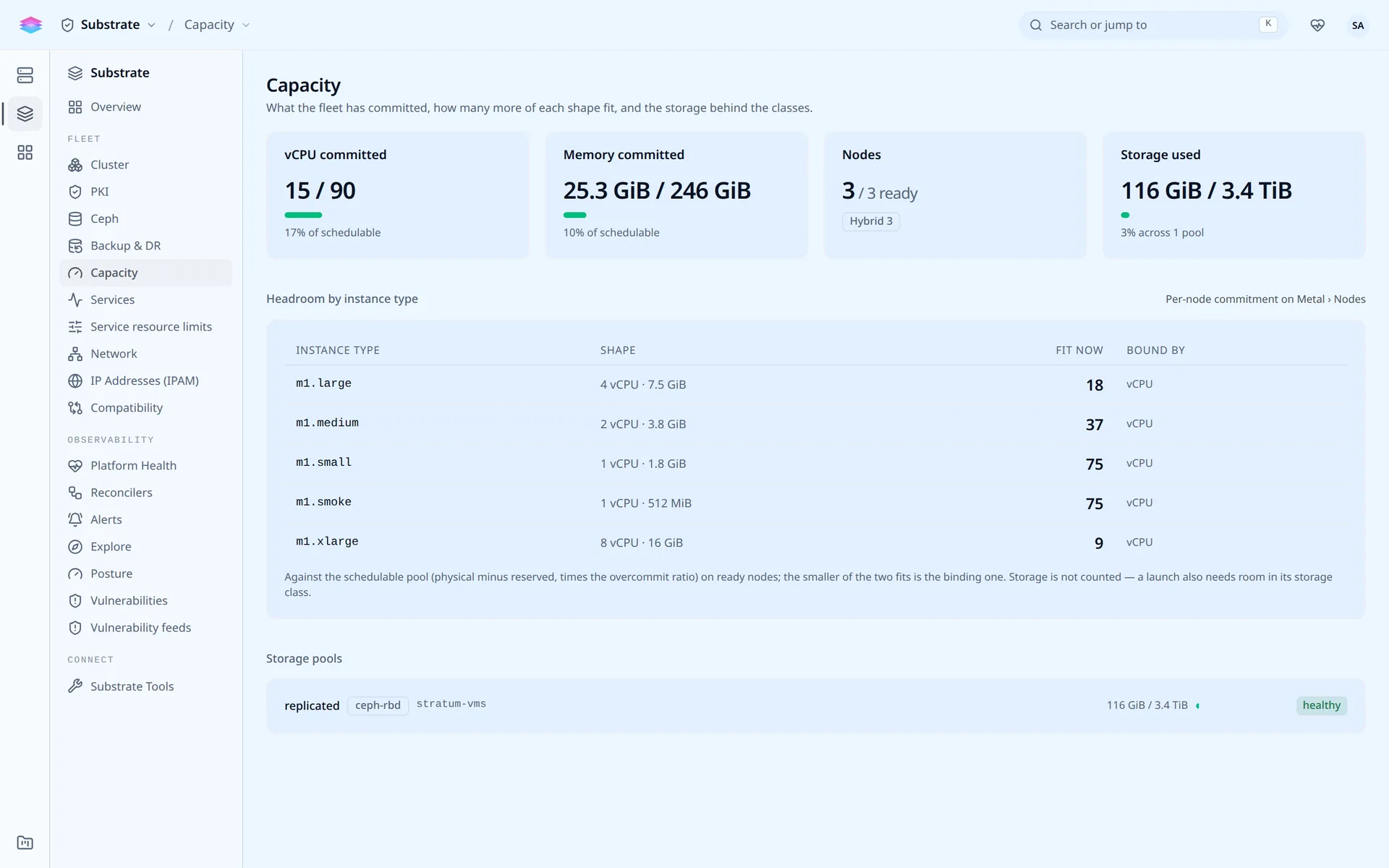
Capacity How many more of each shape the cluster can place.
Substrate
Cluster HA, libvirt, OVN, Postgres, Ceph, reconcilers, health.
-
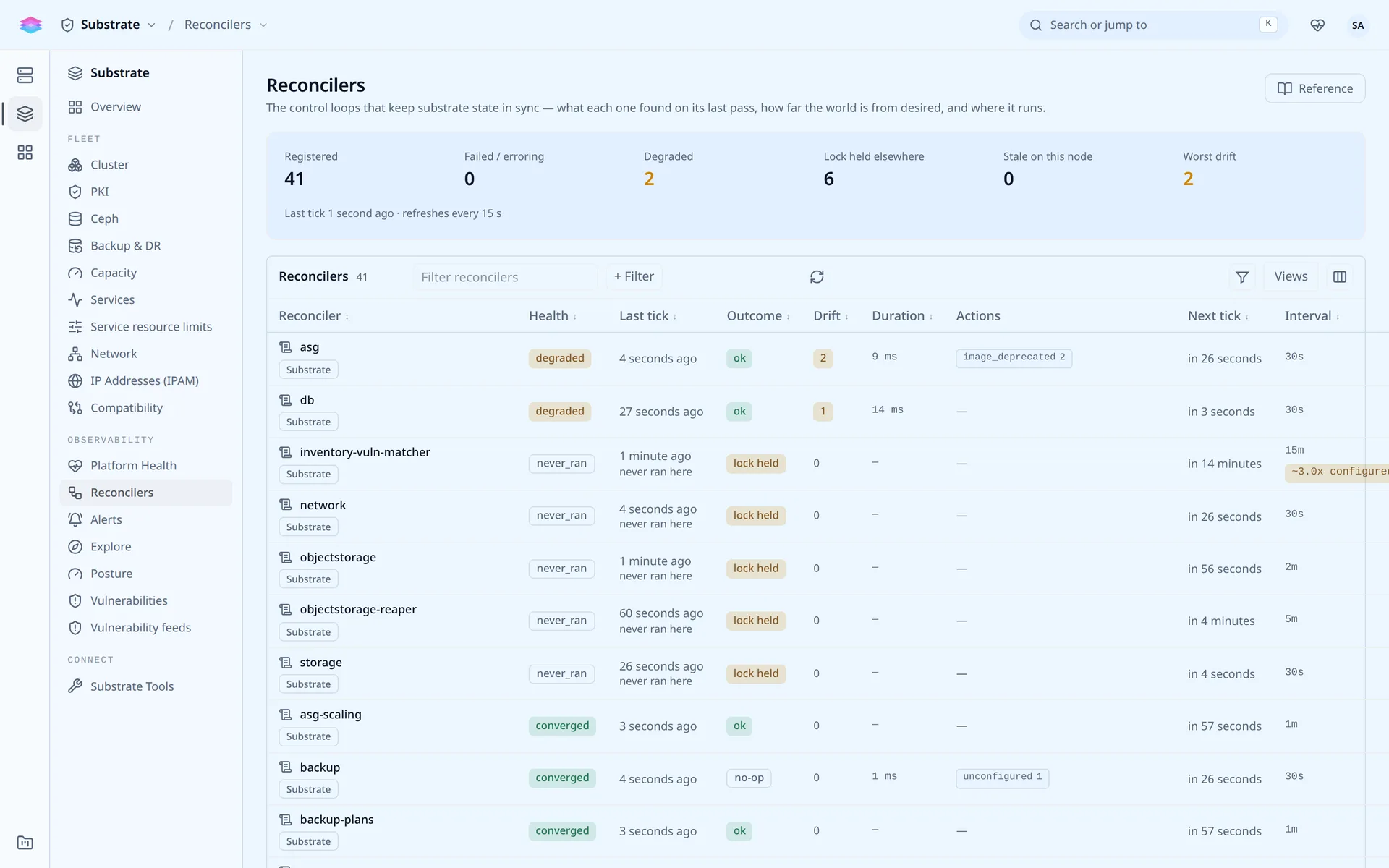
Reconcilers Every converging loop: what it owns and when it last ran. -
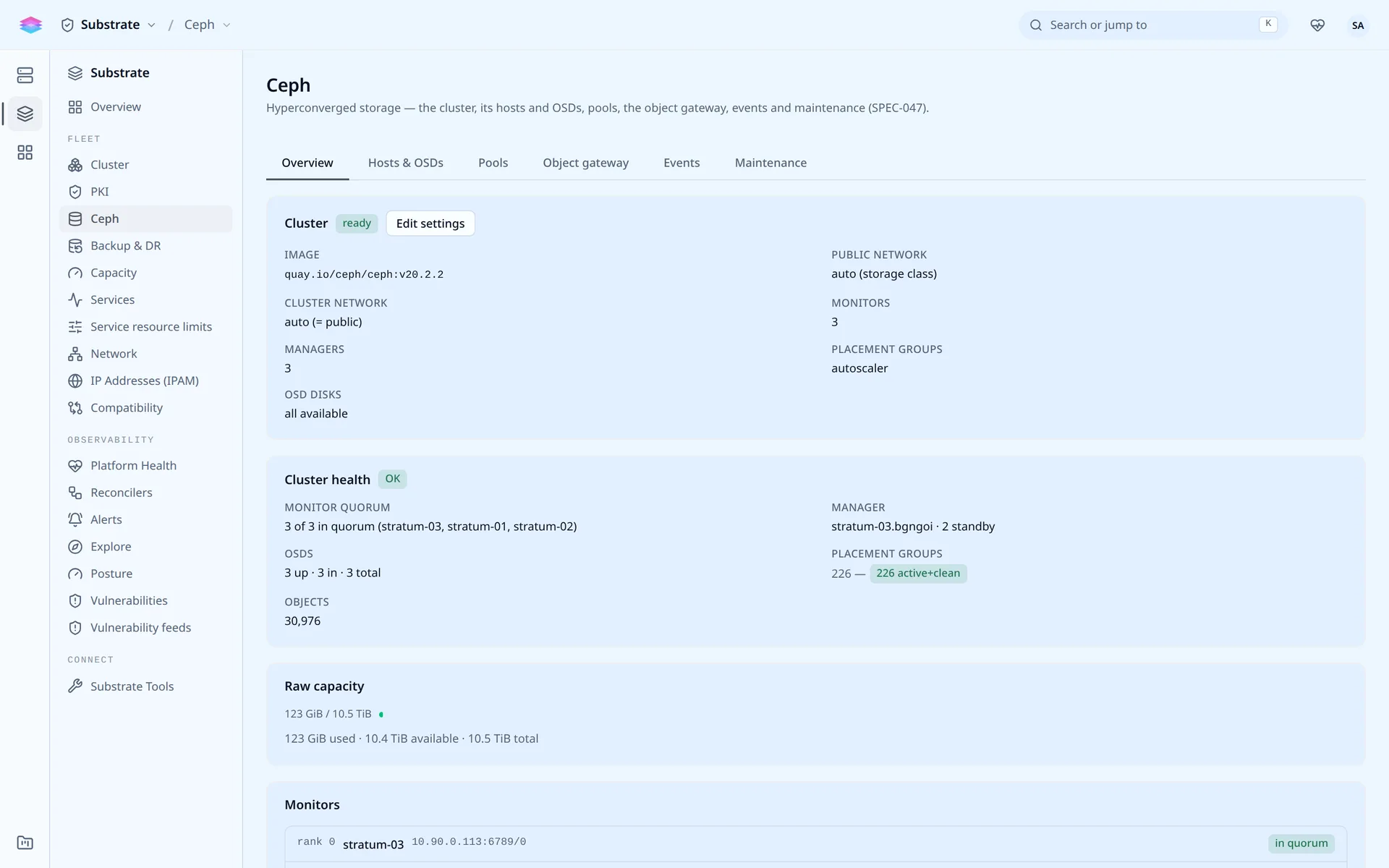
Ceph Ceph health, OSDs, pools, capacity and recovery. -
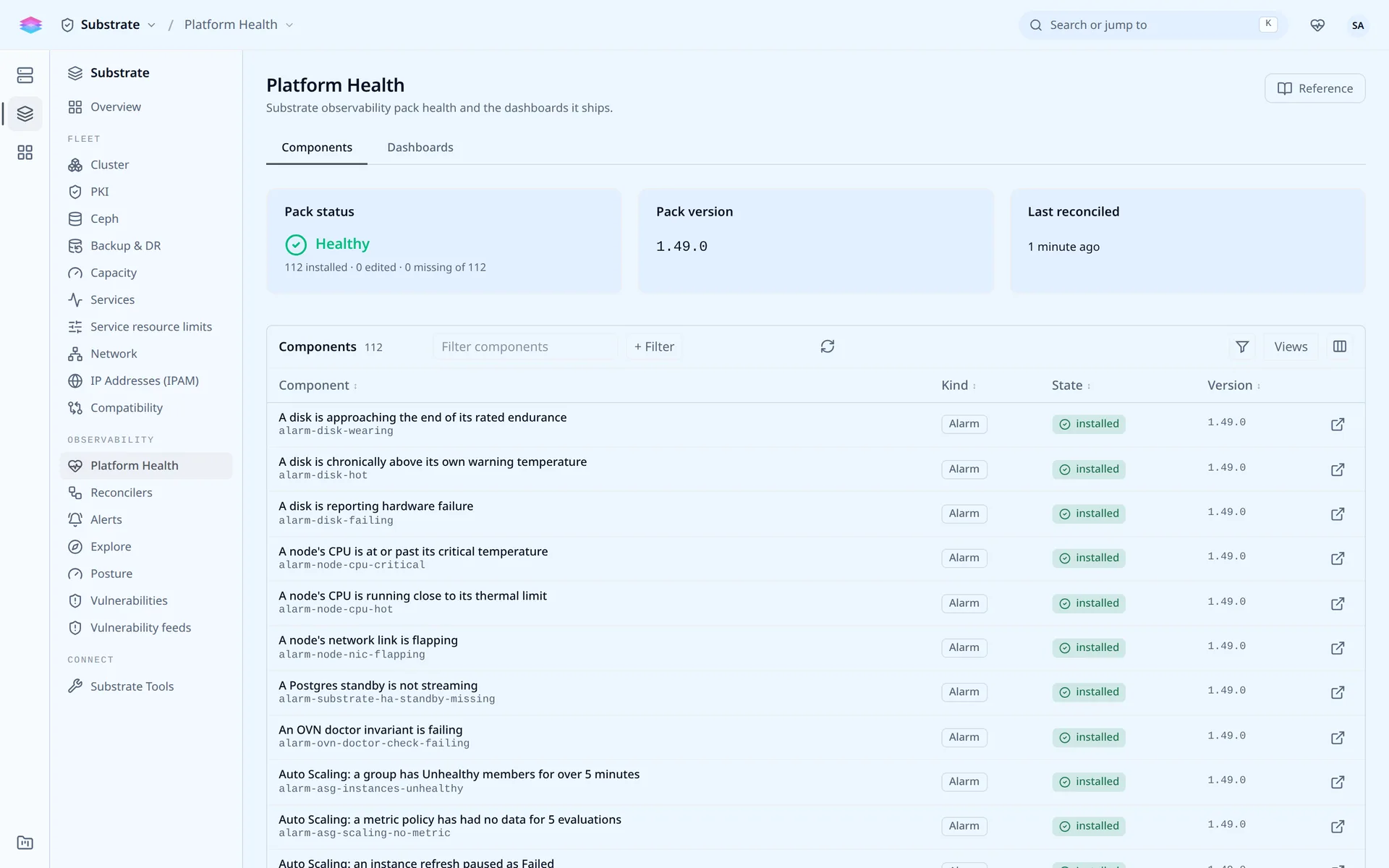
Platform health Checks over every substrate component, with their alarms.
Platform
Organizations, quotas, the catalog, identity, audit.
-
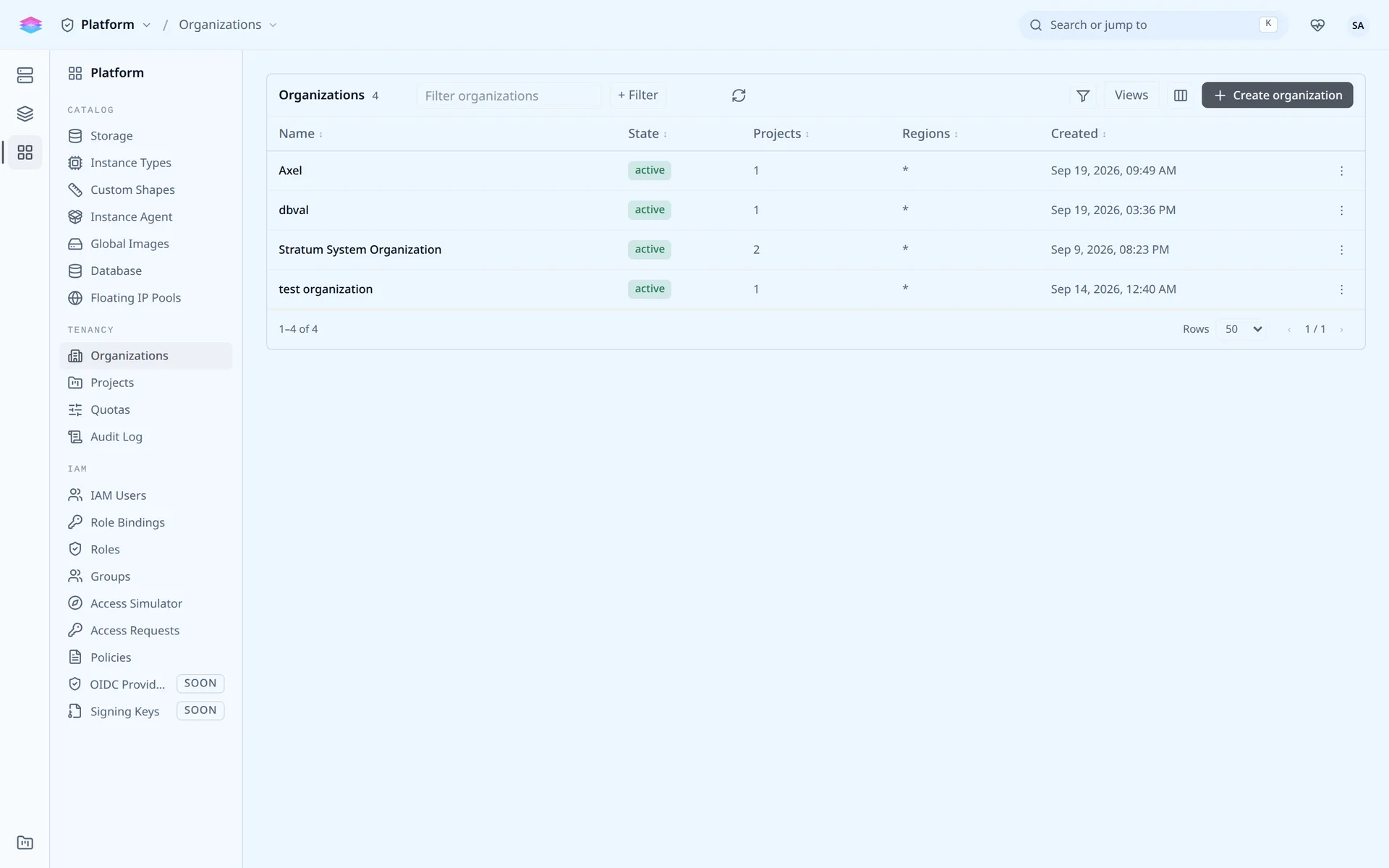
Organizations The tenants: who they are and what they hold. -
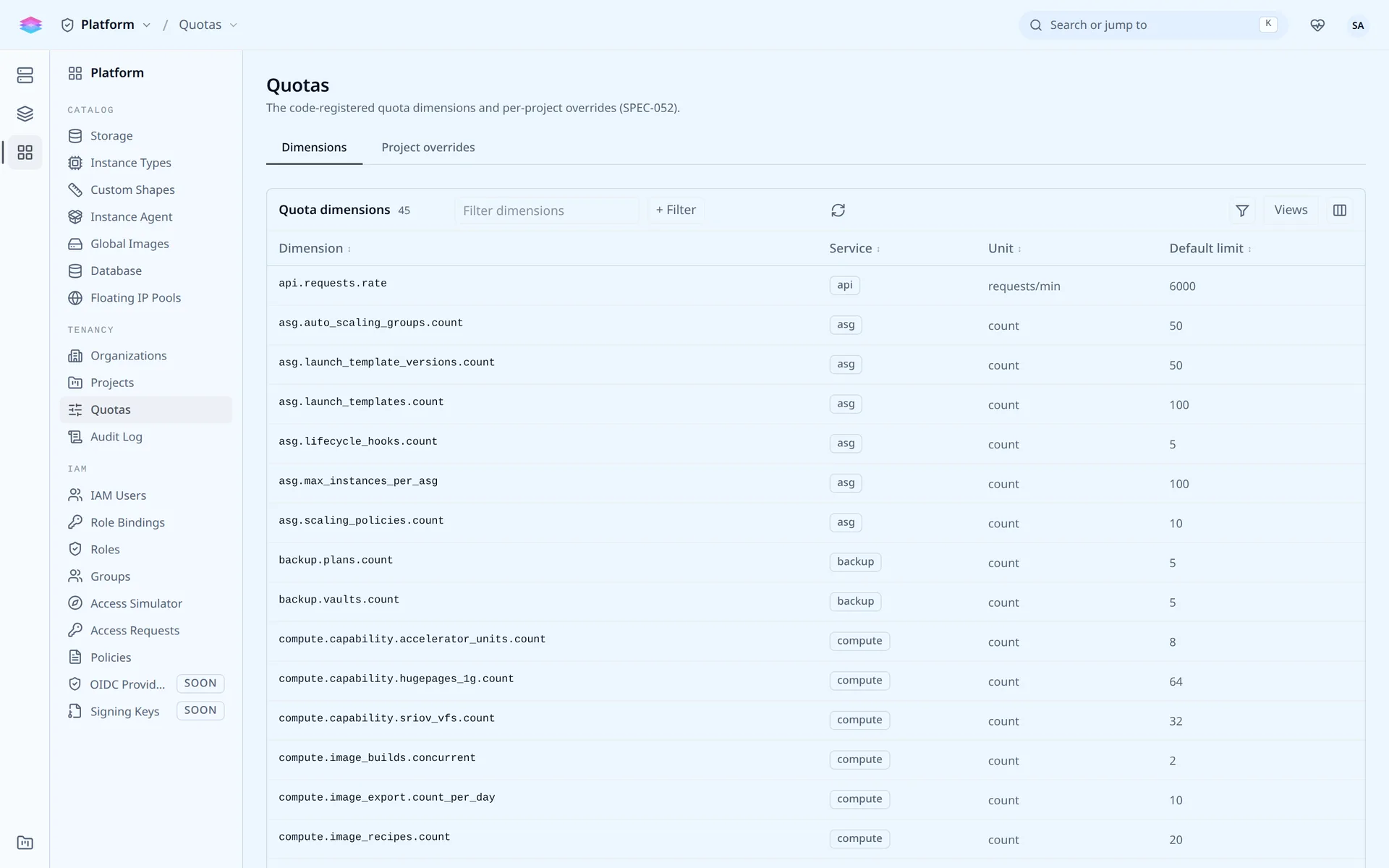
Quotas Limits per project per resource, against what is used. -
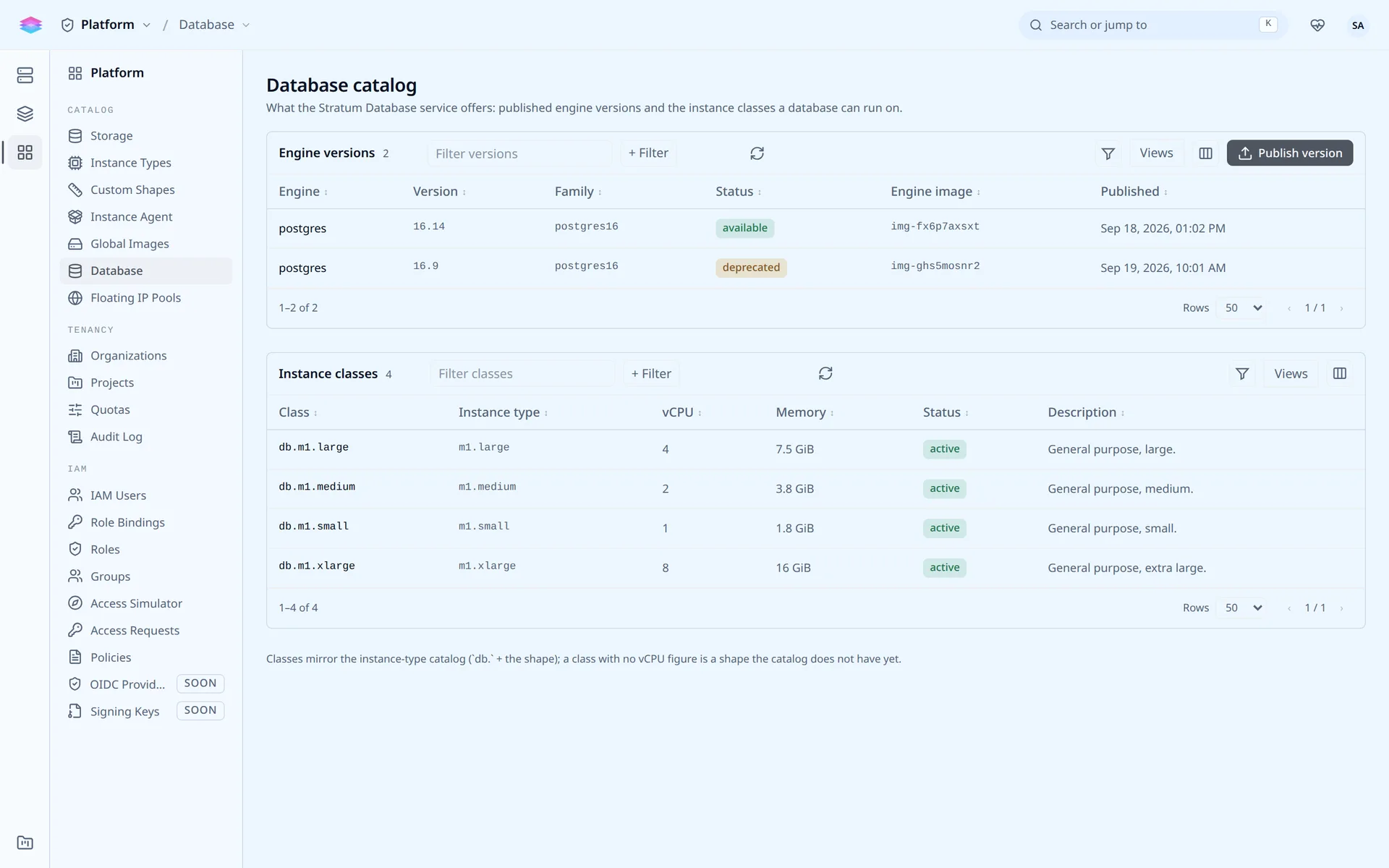
Database catalog The engine versions and classes tenants pick from. -
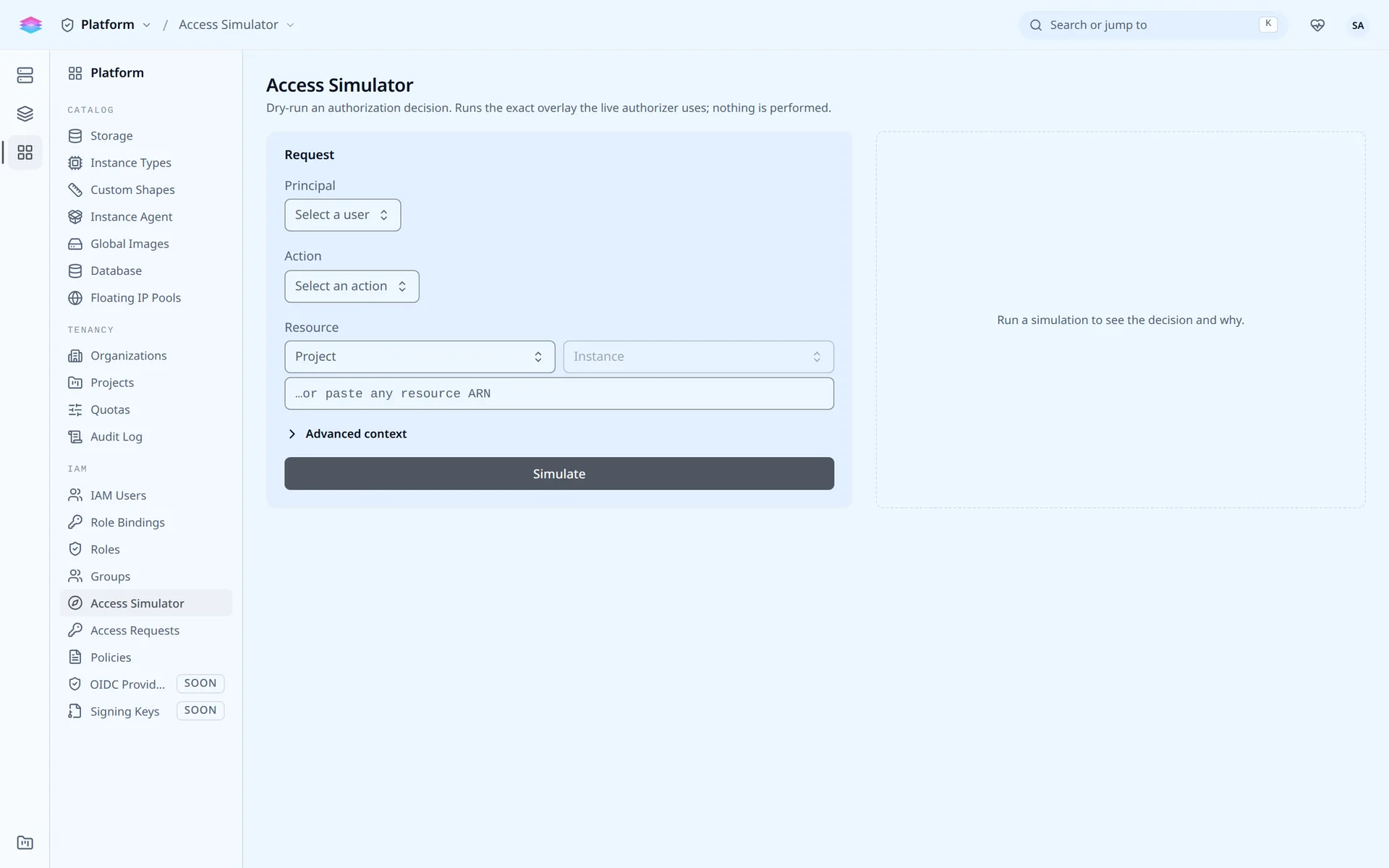
Policy simulator Would this principal be allowed this action, and which policy decided? -
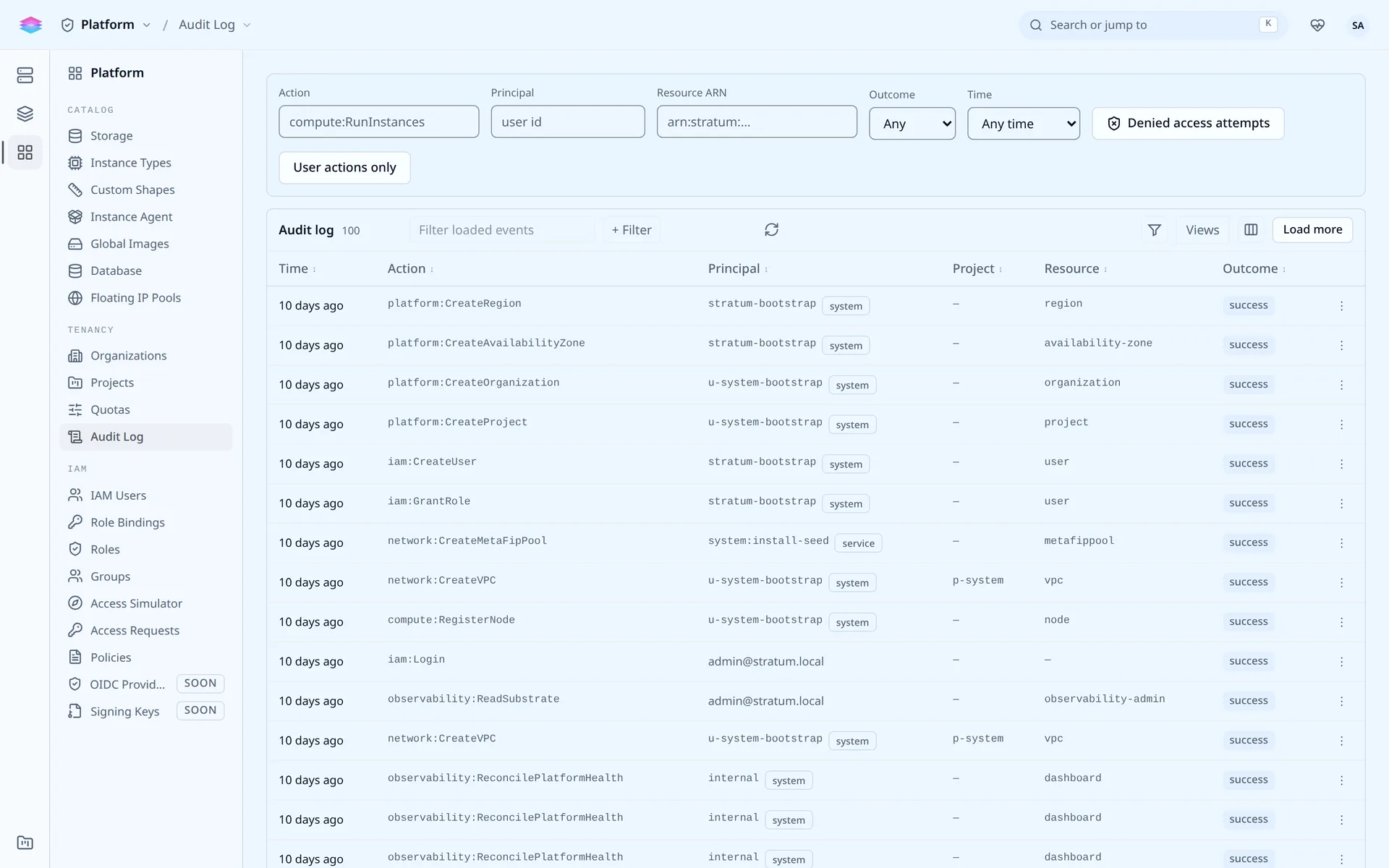
Audit Every call, hash-chained, filterable, exportable. -
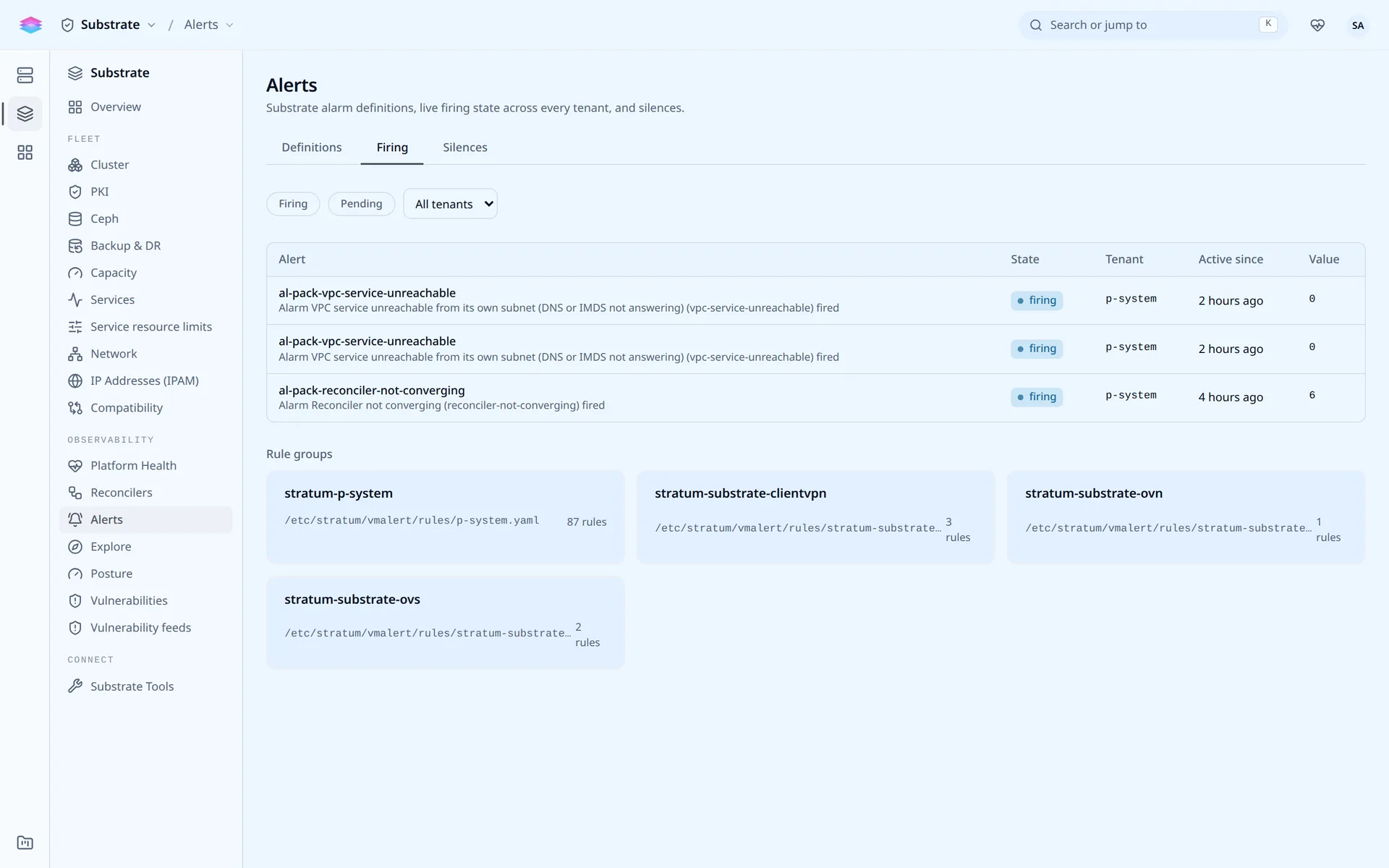
Alerts What is firing, with silences and notification channels.
Day to day
Each is also an API call and a CLI verb.
| Onboard a tenant | Create the organization and project, apply a quota tier. |
|---|---|
| Watch the fleet | Nodes, capacity, storage health and the platform-health pack on one home page. |
| Add a node | A join code, the same ISO on the new machine, an approval. A cluster is 3 to 5 nodes. |
| Take a node out | Drain it and instances move off; bring it back and it reports ready. |
| Publish what tenants use | Instance types, global images, database engine versions, floating-IP pools. |
| Answer “why was this refused?” | The policy simulator names the policy that decided. |
| Get paged when it matters | Alarm rules deliver to webhooks and push channels; silences for known noise. |
| Prove what happened | A verifiable audit trail, exportable as CSV. |
| Back up the cloud itself | Database, secrets store and credentials go to a target outside the cluster. Off until you set one. |
| Upgrade | A signed release: plan, start, rolled node by node, one command to roll back. 0.7.0 starts the upgrade chain; 0.7.0 to 0.8.1 is the first upgrade. |
Running it for others
The demo is this: one install and a site that gives each sign-up a tenant.
Where the operator docs live
Install, cluster management, upgrades and runbooks are in the documentation.